Last week Tina visited the Mothership with a stack of books to give to former coworkers. As she downsizes her epic library and monumental record collection.
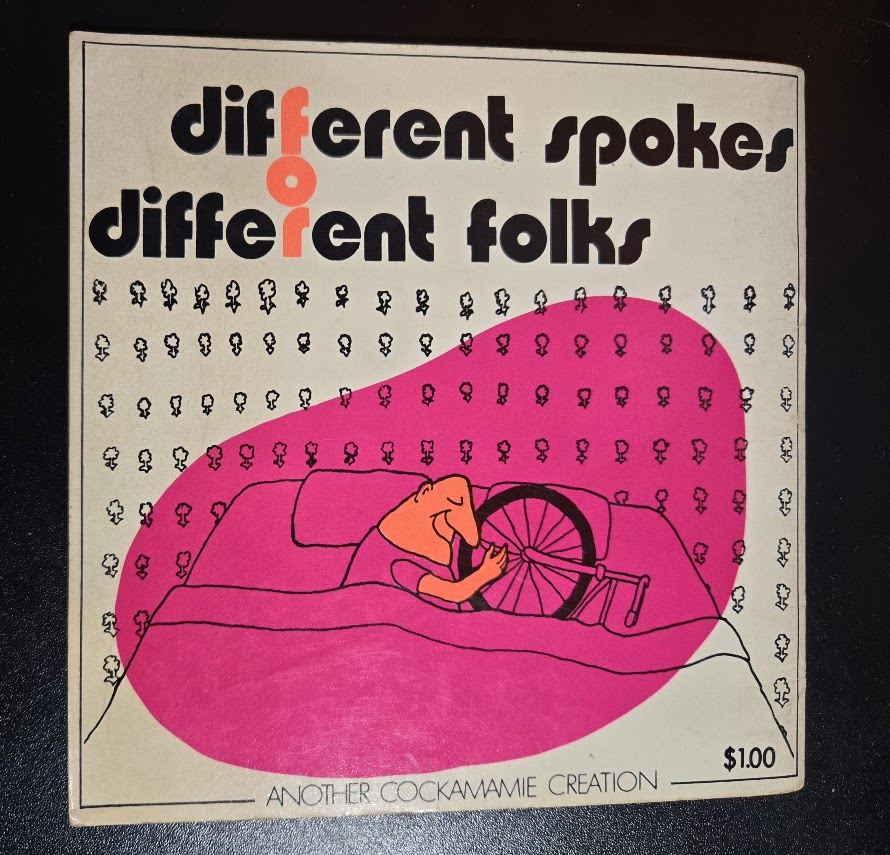
When she reached into her satchel, the first 5 books she presented to me were: been-there, done-that, own-that, read-that, reading that… …until finally she got to the Different Spokes book from 1973, a book I’d never seen before. I’m now the proud owner of that book as well as all the other ones in this list. Pass it on.
Tina gifted the other 5 to Alistair and Russell.
Bike Cult: the ultimate guide to human-powered vehicles by David B. Perry 1995
09 Dave gifted me this book in 1995. It’s been collecting dust for 30 years and this reminds me that it deserves a fresh look in 2026.
Bicycle Messenger by Kyle Shepard 1999
140 pages of beautiful black & white photography. A heaping helping of SF messengers and CMWC 1996. A keeper.
The Rider by Tim Krabbe 1978
published in Dutch, later translated to English. 150 pages of first-person suffering a 150k amateur road race in Fictional France. It’s all in his mind. A true classic that is worth reading again.
The Immortal Class: bike messengers and the cult of human power by Travis Hugh Culley 2001
This guy got a book deal, got on Oprah, got a national book tour too. It’s worth reading. However “real” messengers working in Chicago - at the time THC claims to have been a messenger - will point out all the BS and ripped off stories he claimed as his own.
Bike Snob by Eben Weiss 2010
I didn’t buy this book 16 years ago. I was very familiar with his website. However, a couple weeks ago Junior-Junior pulled a pristine copy from the little free library. Good stuff.
Different Spokes for Different Folks 1973
This book (see photo above) was in Tina’s book collection since her childhood. It's a series of one-liners and comic illustrations. It’s also a reminder of what was socially acceptable in 1973 and what was considered humorous once upon a time.
Add Comment